When Prayer Feels Like Talking to the Ceiling
You have been a Christian long enough to know this is not supposed to happen.
You sit down to pray. You close your eyes. Maybe you have your Bible open, or a journal nearby. And then... nothing. The words come out, but they feel hollow before they hit the air. You finish, stand up, and wonder what just happened, because it did not feel like anything happened at all.
If you have been walking with God for years and your prayer life has quietly gone dead, you already know the guilt that comes with that. You know what prayer is supposed to be. You have read the verses. You have heard the testimonies. And yet here you are, going through motions that feel more like duty than devotion.
The dryness is real. It is also more common among serious, long-term believers than most churches ever admit.
Here is what is actually going on, and what you can do about it.
Prayer Became a Performance Without You Noticing
The shift is gradual enough that most people miss it. At some point, prayer stops being a conversation and starts being a task on a spiritual to-do list. You pray because you are supposed to, because guilt follows when you skip it, because that is what faithful Christians do.
That is not an accusation. It is a pattern that develops naturally after years of routine.
The problem is that performance and relationship cannot occupy the same space. Jesus addressed this directly when he told his followers to go into a room, shut the door, and speak to the Father privately. Not perform for the Father. Not report to the Father. Speak to him, the way you speak to someone you trust.
What this looks like in practice is less polished and more honest. Instead of opening prayer with the right theological language, you tell God what you are actually carrying. The frustration that has been building for weeks. The fear you have not said out loud to anyone. The doubt that surfaces in the quiet and disappears the moment you are around other Christians. The thing you want but feel guilty wanting.
Authenticity does not lower the quality of prayer. It is what prayer is actually for.
Your Mind Is Not Set Up for Stillness Anymore
This is not a character flaw. It is a physiological reality.
Most people in their 40s and 50s spend hours each day moving between screens, notifications, short videos, and constant background noise. The brain adapts to that pace. It learns to expect rapid input and grows restless the moment input stops.
Then you sit down to pray, and within 90 seconds your mind has moved to what you need to do after this, something a coworker said last Tuesday, and whether you turned the oven off.
The problem is not lack of discipline. The brain needs a transition.
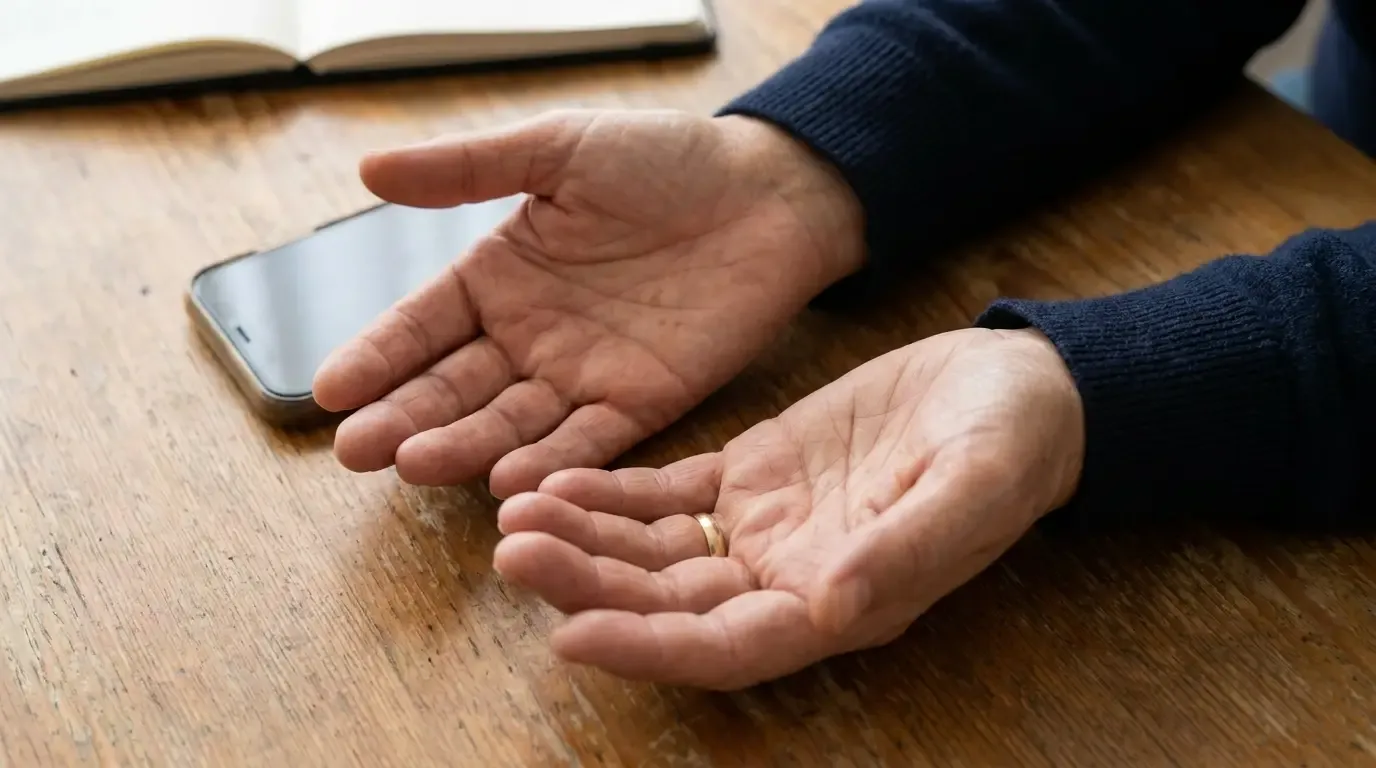
Psalm 46:10 does not say "try harder to be still." It says "be still, and know that I am God." The stillness is the precondition, not the reward. Before prayer, put the phone in another room. Sit quietly for five minutes and do nothing. Let your breathing slow. Give your nervous system time to downshift from information-processing mode into something that can actually listen.
That five-minute gap before prayer changes more than most elaborate prayer systems ever will.
You Have Been Praying Transactionally
Think about any relationship in your life where one person only shows up when they need something. It does not matter how long the history is. That pattern slowly poisons the connection.
Prayer drifts transactional without anyone planning it. Life gets hard, you pray. You need guidance, you pray. Something scares you, you pray. And in the seasons when nothing is urgently wrong, you pray briefly, if at all.
The result is a prayer life built entirely around requests, which produces a thin, one-directional relationship.
A simple structural shift helps here. Try moving through worship, gratitude, and honest confession before you get to anything you need. Not as a religious formula, but as a genuine reorientation. Worship reminds you who God is before you tell him what you want. Gratitude anchors you in what he has already done. Confession clears anything that has been sitting between you.
By the time you get to your requests, you are praying from a different posture. The "God, give me" becomes "God, shape me," and that shift is not small.
Unresolved Things Are Creating Quiet Distance
David wrote in Psalm 66 that if he had cherished sin in his heart, God would not have listened. That is not a statement about God withdrawing love. It is a statement about what unresolved things do to intimacy.
Bitterness you have decided not to release. Compromise you have made peace with. Something you are avoiding in your own conscience. These do not necessarily feel dramatic. They sit quietly in the background, creating a low-level static that makes it hard to sense anything clearly in prayer.
This is worth sitting with honestly. Not with self-condemnation, which is not the same thing as honesty, but with the genuine question: is there anything I am carrying that I have not brought into the open with God?
Repentance in this context is not punishment. It removes the barrier. Many people describe a noticeable shift in their prayer life within days of honest confession, precisely because nothing was blocking God's end of the connection. The block was on their side, and they cleared it.
Dry Prayer Is Not Failed Prayer
Here is the misconception that traps more long-term believers than almost any other: the idea that real prayer always produces an emotional experience, and that dry prayer is a sign something is wrong.
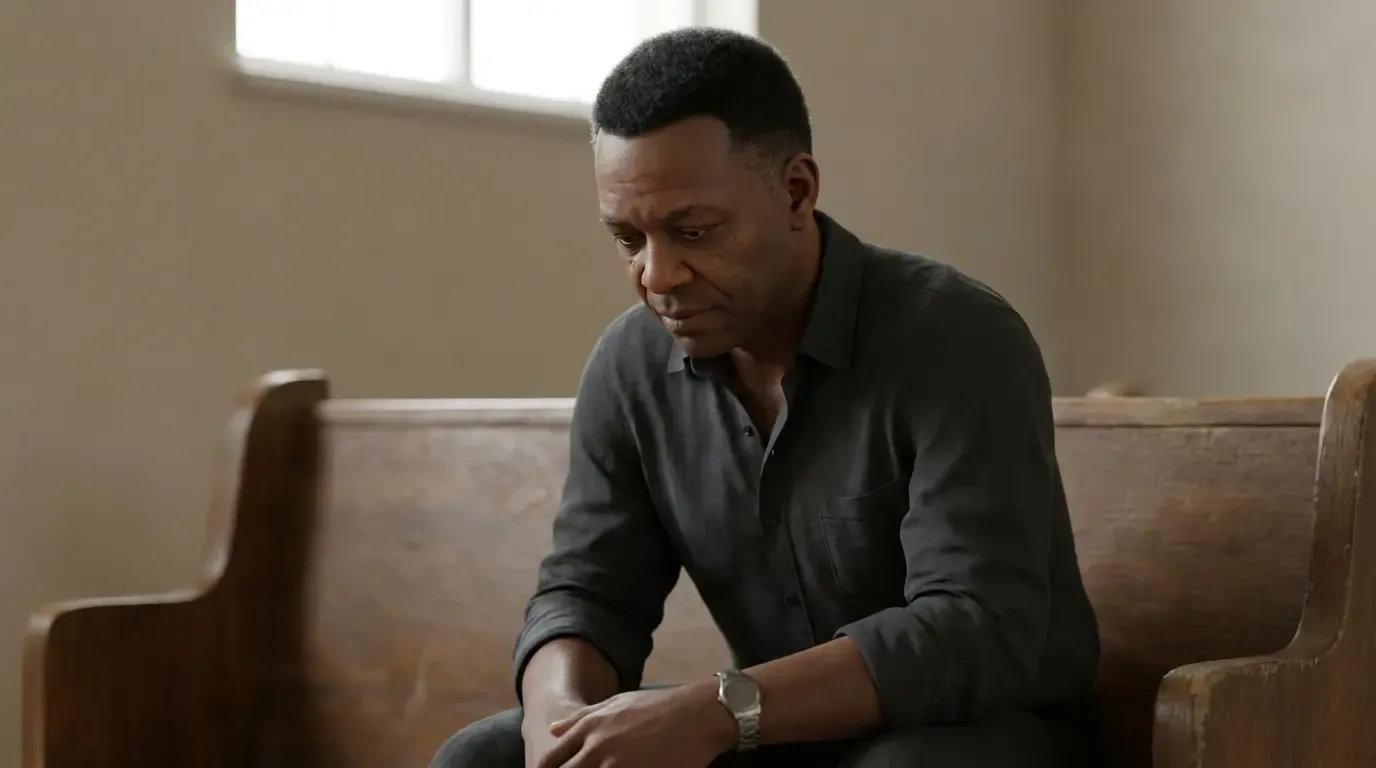
It is not. Some of the most spiritually formative seasons in a believer's life feel completely flat on the surface. No sensation. No warmth. No particular sense of God's presence. Just showing up and saying the words anyway.
Jesus prayed through exhaustion, grief, and the weight of Gethsemane. His faithfulness in prayer was not measured by how he felt during it.
A mature prayer life is built on consistency, not on emotional highs. The feelings matter, and they will return. But treating their absence as a signal to stop is what turns a dry season into a permanent one. Spiritual endurance develops in the dry seasons. The believers with the deepest prayer lives are almost never the most emotionally expressive. They are the most faithful in the ordinary, quiet moments.
Stop Talking and Start Listening
Most prayer is a monologue. You speak. You finish. You leave.
Prayer that goes only one direction will eventually feel like a very long list read aloud to someone who may or may not be in the room. Listening in prayer is not the same as hearing an audible voice. It is slowing down enough to notice conviction rising about something you have been ignoring. It is Scripture you read that morning suddenly connecting to something you are facing now. It is a quiet clarity that was not there before you sat down.
After you finish praying, stay. Sit quietly for ten minutes. Open your journal and write whatever surfaces. Pay attention to what your conscience is doing. Silence is uncomfortable because it exposes what is underneath the noise, but that exposure is usually exactly what prayer needs to move forward.

What a Realistic Reset Actually Looks Like
Starting over does not mean committing to two hours of prayer every morning. That kind of commitment almost always collapses, and then the failure becomes another piece of evidence for the voice that says you cannot get this right.
Start with ten honest minutes. One quiet place. No phone. Pick one Psalm to read slowly before you pray. Let the words of Scripture become the words of your prayer where they fit. Start with worship, briefly and genuinely, before you say anything you need.
That is it. Do that for two weeks before adding anything.
Some days the ten minutes will feel alive. Many days it will feel ordinary. Both count. The measure of a strong prayer life is not how spiritual each session feels. It is whether you kept showing up through the sessions that felt like nothing.
The distance you are feeling right now is not permanent, and it is almost certainly not what you think it is. The door was not shut on God's side.
Latest Posts:

© 2026 Jesus Guided Life - All Rights Reserved